The drivetrain is the robot's foundation
Move
Reach game pieces, scoring zones, and endgame areas quickly and controllably.
Align
Position the robot so intakes, lifts, and scoring mechanisms can do their jobs.
Support
Carry the robot structure, battery, electronics, and mechanisms without flexing or tipping.
A good drivetrain is not just fast. It is square, reliable, repairable, stable, and matched to the game.
Start with the game, not the wheels
Design questions
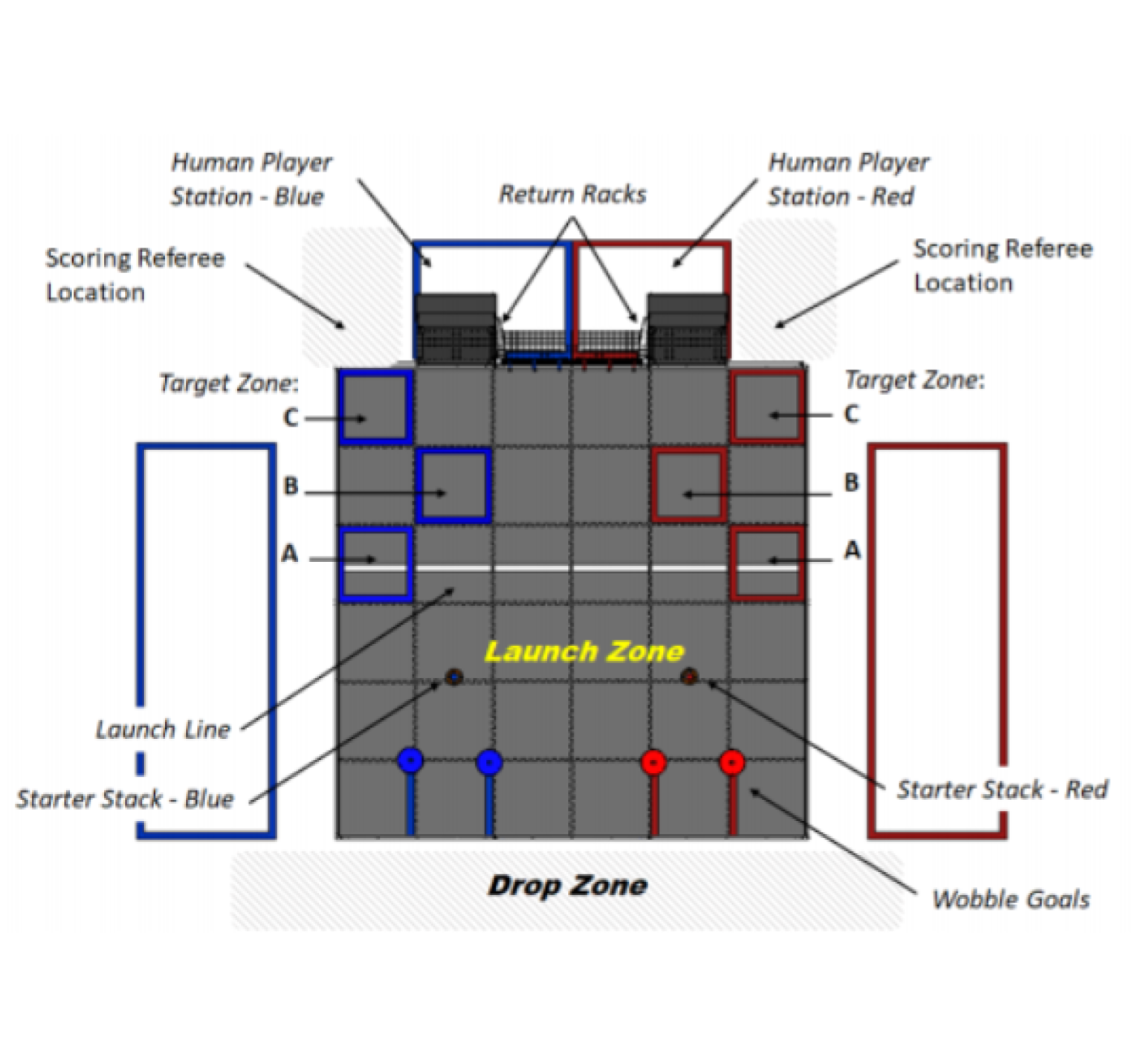
- Does the robot need frequent sideways alignment?
- Are there obstacles, ramps, seams, or crowded lanes?
- Does the robot need to cross the field quickly or make short precise moves?
- How much room must remain for the intake, lift, battery, and electronics?
Write measurable requirements before building
Weak requirement
“Make a fast drivetrain.”
Better requirement
“Drive the scoring cycle path in under 8 seconds and align to the target within one robot width.”
Weak requirement
“Build something strong.”
Better requirement
“Run ten match-length sessions without chain/belt adjustment, loose wheels, or motor overheating.”
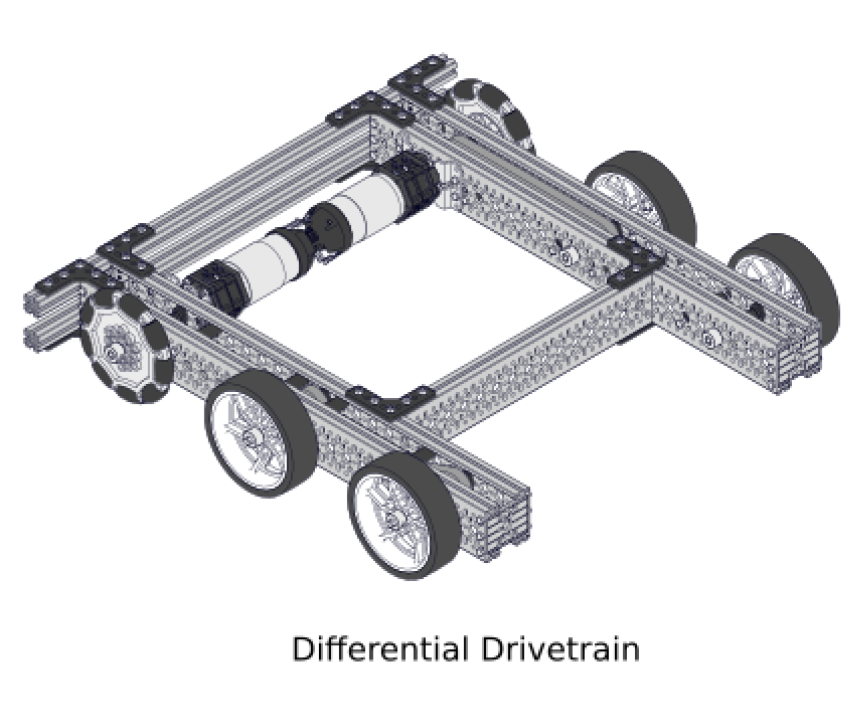
Simple, reliable, and strong forward/backward
Use for...
- Reliability and fast construction
- Game not requiring constant sideways alignment.
- Reducing drivetrain motors
- Autonomous paths with turns and arcs.
Watch out for...
Turning scrub, long wheelbases, and losing time when lining up sideways.
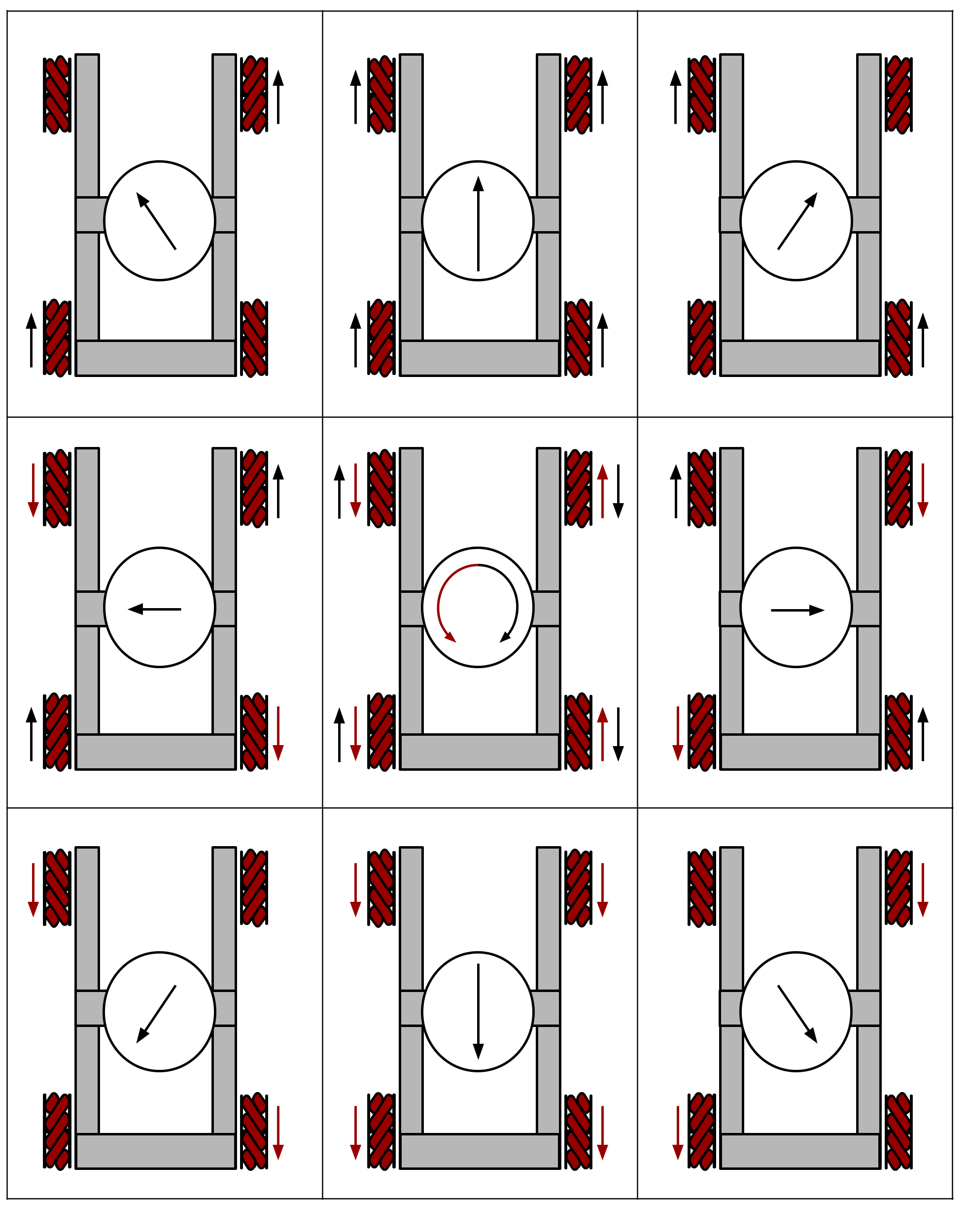
Sideways movement for fast alignment
Advantages
- Strafes directly sideways.
- Moves diagonally.
- Aligns quickly with scoring locations.
- Supports flexible autonomous paths.
Tradeoffs
- Uses four motors.
- Strafing is weaker than forward driving.
- Weight balance and programming matter more.
X-drive, H-drive, and tracks are special-purpose choices
X-drive
Four omni wheels at angles. Omnidirectional, but mechanically unusual and needs vector programming.
H-drive
Differential drive plus a sideways strafe wheel. Useful sometimes, but the center wheel must contact the floor consistently.
Tracks
Strong contact area but heavier, higher friction, harder to turn, and more maintenance.
Wheel type changes interactions
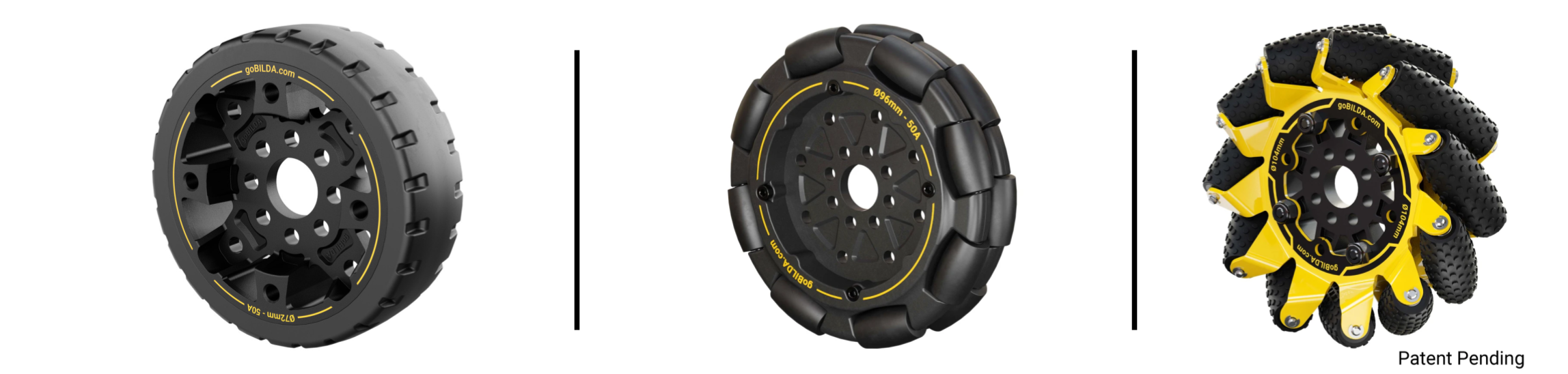
Traction Wheels
Best for pushing, acceleration, and simple differential drives. Too much traction can make turning harder.
Omni Wheels
Roll normally but slide sideways through rollers. Useful for reducing scrub or special holonomic drives.
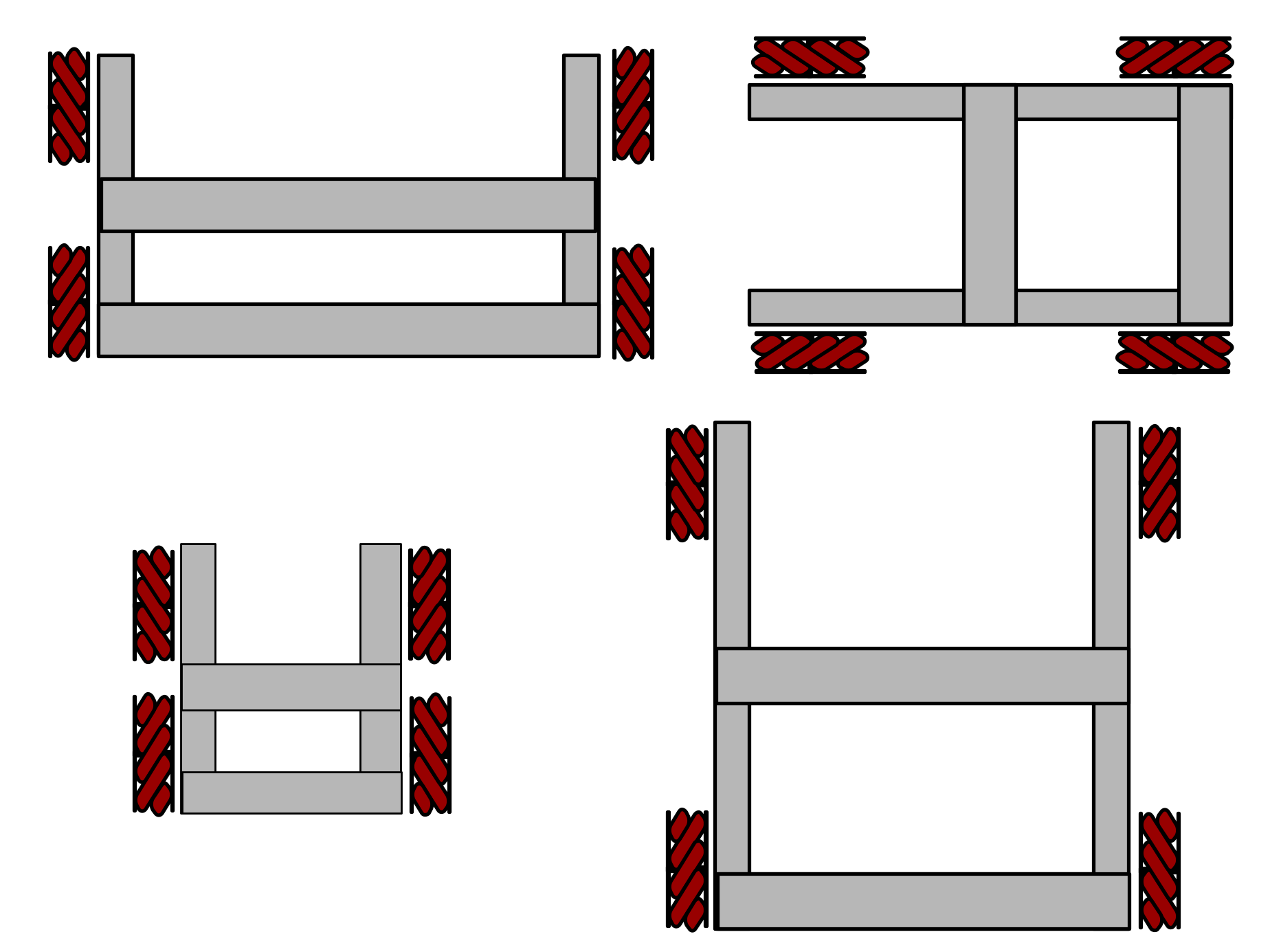
Mecanum Wheels
Angled rollers combine wheel forces to create sideways and diagonal motion.
Diameter affects speed, torque, clearance, and stability
Larger wheels
- More theoretical speed at the same RPM.
- More ground clearance.
- Less force at the floor for the same wheel torque.
- Often raise the robot higher.
Smaller wheels
- Lower robot height.
- More force at the floor for the same torque.
- Easier packaging.
- May struggle with obstacles or field seams.
Gear ratio trades speed for torque
More reduction
More wheel torque, better acceleration, easier control, and less stalling, but lower top speed.
Less reduction
Higher theoretical speed, but less wheel torque, more current draw under load, and harder control.
Choose the ratio that makes the complete robot controllable, not the ratio that looks fastest on paper.
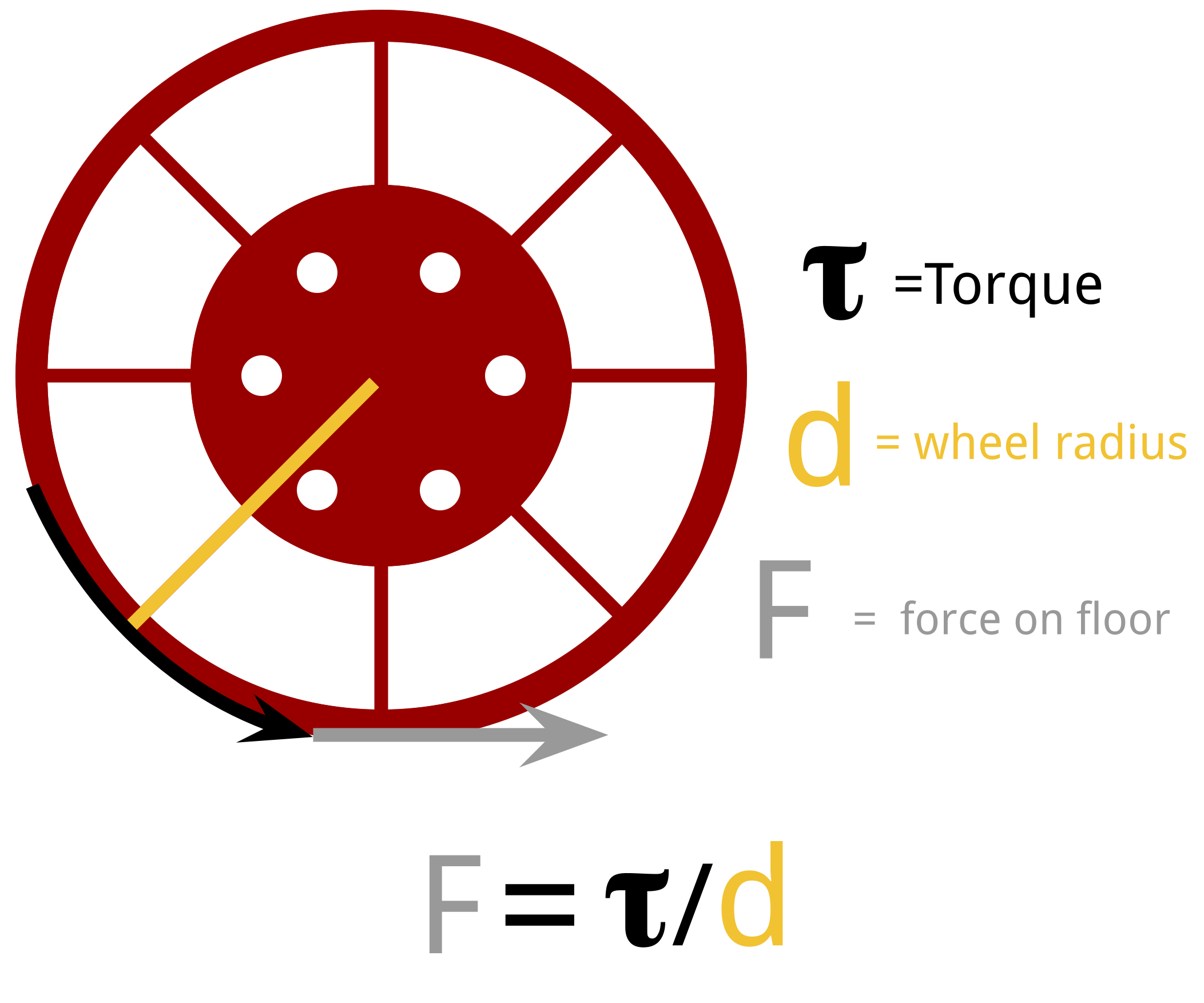
Wheel force depends on torque and radius
The force of the wheel on the floor is determined by both torque and friction. If you go past the total possible force of friction the wheel slips and adding more torque does not help.
Useful relationships
Force ≈ torque ÷ wheel radius
Traction limit ≈ friction
Motor count affects power, wiring, and mechanism options
Two-motor drive
- Saves motor ports.
- Simpler wiring and programming.
- Good for differential drives.
- Each motor carries more load.
Four-motor drive
- More drivetrain torque and acceleration.
- Usually required for mecanum.
- Uses more motor ports.
- More current, wiring, and setup.
The drivetrain should be square, rigid, and sized to strategy
Wide
Better sideways stability and more mechanism room, but harder in tight field spaces.
Long
More front/back stability, but can increase turning scrub for tank drives.
Compact
Navigates well, but tight size constraints and may be less stable.
Balanced weight makes driving more reliable
Careful Placement
Mount heavy components low and near the center when possible.
Balance
Balance left/right weight for straight autonomous movement.
Mecanum Considerations
Balance mecanum corners so every wheel grips.
Extensions
Slow the drivetrain when any extensions are out.
How motor power reaches the wheels
Direct Drive
Few parts and easy troubleshooting, but wheel loads can stress gearboxes.
Chain
Strong, adjustable, and good for linking wheels, but needs tension and alignment.
Timing Belts
Quiet, light, and low maintenance, but require accurate center distance.
Gears
Compact and positive engagement, but require accurate spacing and support.
Common starting points for FTC teams
REV Channel Drivetrain
Good for learning differential drive, chain/gears, and flexible channel construction.
REV Mecanum Drivetrain
Good for teams using the REV ecosystem and needing lateral movement.
goBILDA Strafer
Low-profile mecanum platform using independent wheel motors and common goBILDA parts.
A good drivetrain can be repaired quickly
Design access
- Reach motor screws and connectors.
- Replace wheels without disassembling the robot.
- Keep chain/belt tensioners accessible.
- Label motor ports and encoder wires.
Carry spares
- Wheels, hubs, collars, bearings.
- Chain, master links, belts, pulleys, sprockets.
- Motor and gearbox spares.
- Tools needed for the exact drivetrain.
Mechanical choices change software difficulty
Differential control
Often uses arcade or tank drive with forward/backward and turn commands. IMU correction can improve straight driving.
Mecanum control
Combines forward, strafe, and turn. Field-centric control, heading hold, and speed modes can help drivers.
Test repeatability, not one good run
Drive tests
Forward, backward, turns, strafes, obstacles, and field paths.
Load tests
Final robot weight, lift raised, mechanism running, low battery.
Durability tests
Match-length runs, wall bumps, motor temperature, loose fasteners, chain/belt check.