Motion and Motors Training Module
Motors power nearly every robot function
Drivetrain
Moves the robot, accelerates, turns, and resists defense.
Intake
Pulls game pieces into the robot quickly and consistently.
Shooter
Spins wheels or flywheels to launch game pieces.
Arm/Elevator
Lifts mechanisms and holds position against gravity.
Climber
Raises the robot or holds the robot in place at endgame.
Conveyor
Moves game pieces inside the robot between subsystems.
Indexer
Positions game pieces before scoring or shooting.
Swerve Steering
Turns individual swerve modules to face the correct direction.
Angular Velocity
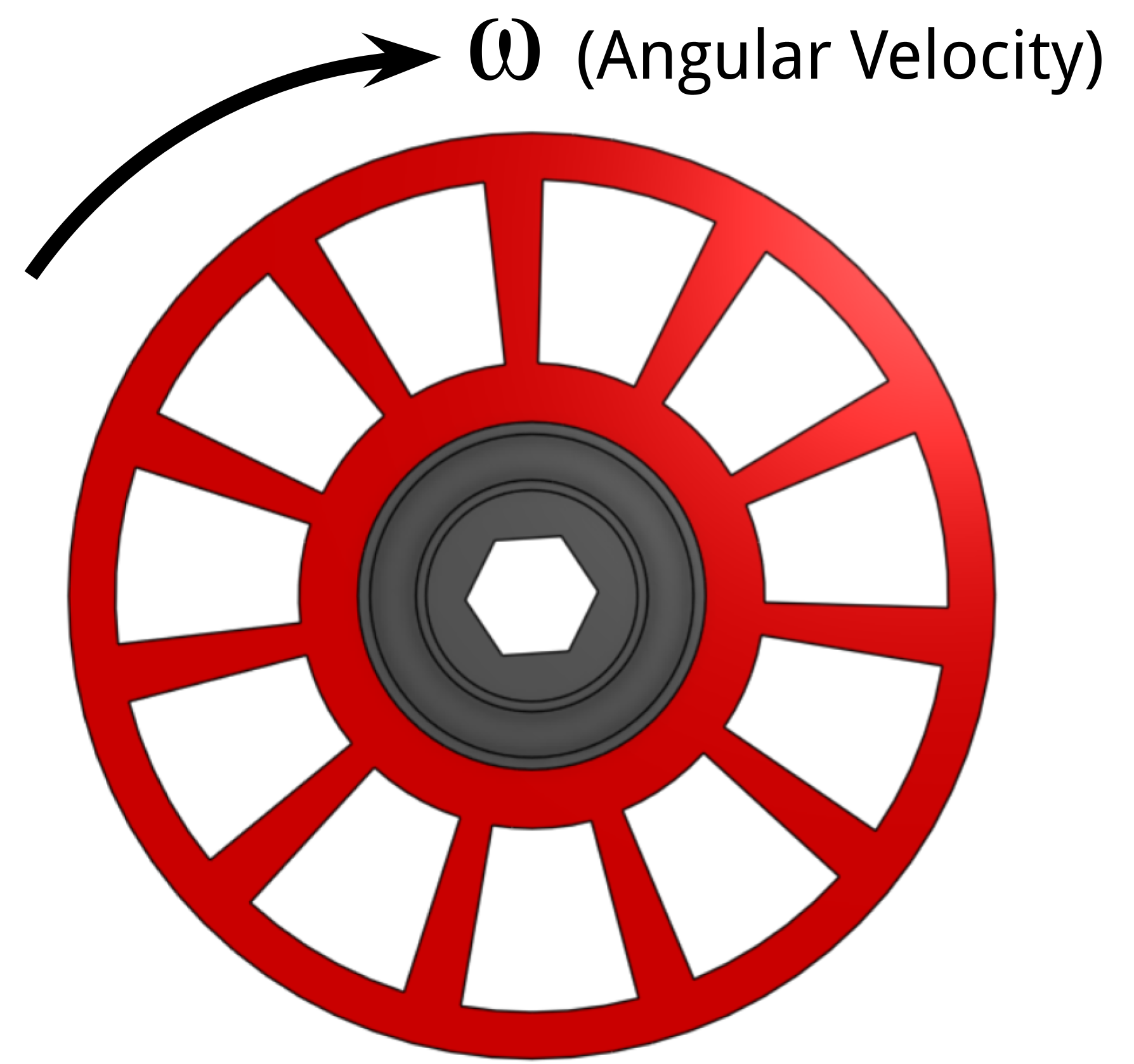
How fast something rotates and usually measured in RPM (revolutions per minute). This velocity is not determined by the radius of the object.
Torque
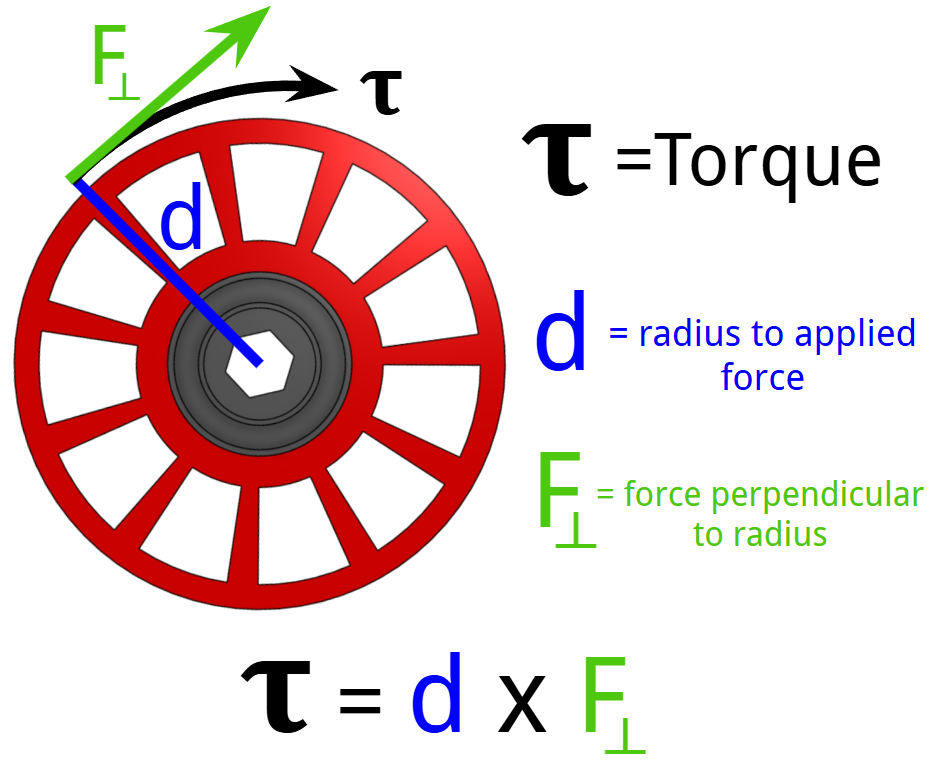
How much rotational force something puts out and is determined by the size of the object's radius and the radially perpendicular force.
The two most important outputs to know about a motor are its angular velocity and its torque. Many FRC motors spin thousands of RPM, which is usually too fast for arms, climbers, and elevators and require gearing to reduce it.
Torque and Angular Velocity have an inverse relatiosnhip. If you gain one you usually lose the other.
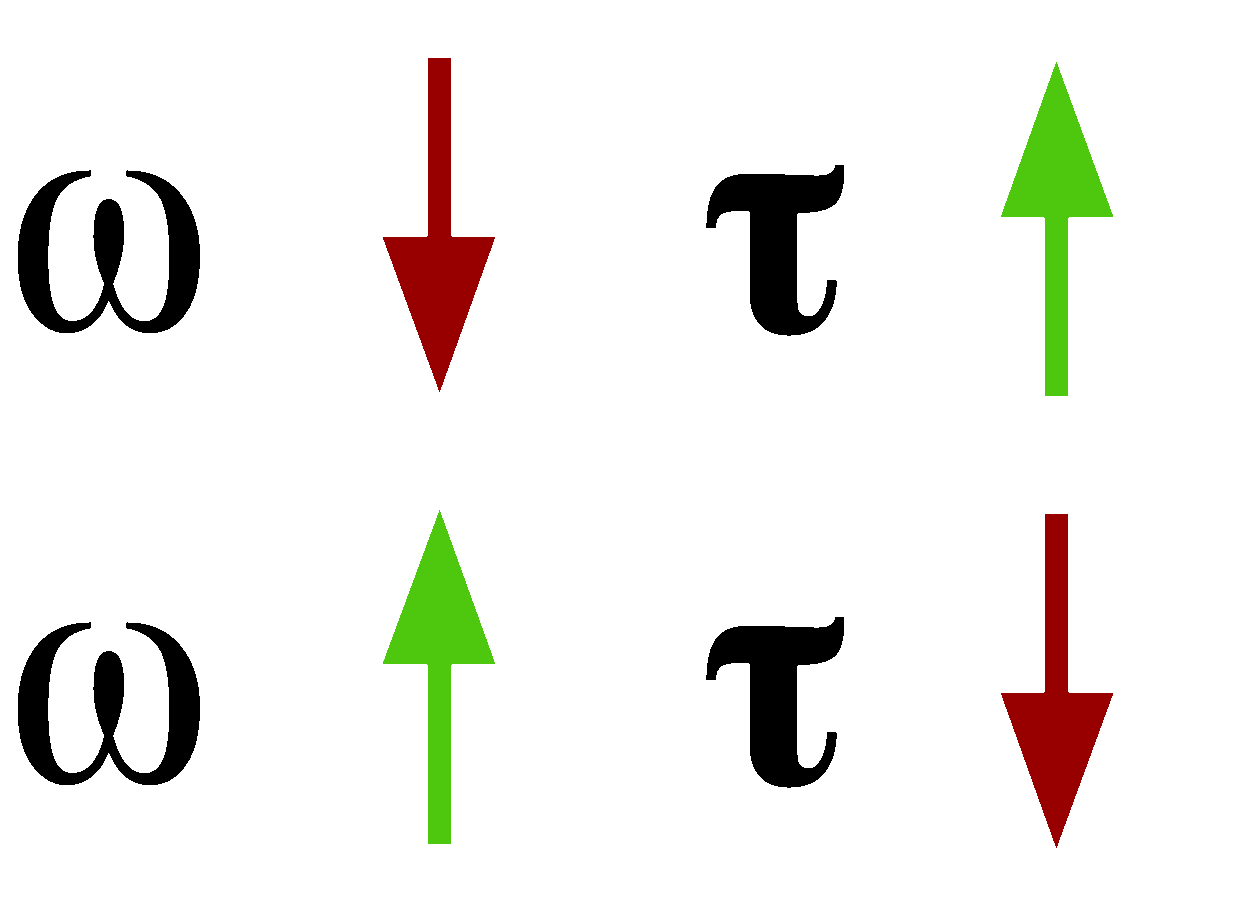
Angular Velocity
In FRC, shooters, rollers, intakes, conveyors, and swerve drive wheels often need higher output velocity, but arms, elevators, and climbers usually need that motor velocity reduced through gears, belts, chains, or gearboxes. If the output spins too fast, the mechanism may be hard to control, unsafe, inaccurate, or likely to break game pieces and robot parts.
Torque
Torque matters because it tells you whether the motor system can create enough rotational force to move a load, resist defense, lift weight, or hold position against gravity. Drivetrains, climbers, elevators, arms, and heavy manipulators need enough torque at the output, which usually means using gear reduction and current limits to avoid stalling or overheating the motor.
Two of the most important inputs to consider with motors are:
Voltage
The electrical push from the battery. The robot is a 12V system, but voltage drops under load.
Current
How hard the motor is working. Heavy load, stalls, and fast acceleration draw more current.
More load usually means more current
More Load
Mechanism is harder to move.
More Current
Motor draws more amperage.
More Heat
Motor and controller heat up.
More Risk
Brownouts, breaker trips, and damage.
Design tool: Use current limits in motor controllers to protect wiring, breakers, motors, controllers, and mechanisms.
Stall is when the motor is powered but not rotating
Why stall is dangerous
Current is extremely high and much of the electrical energy becomes heat instead of useful motion.
Common FRC examples
- Mechanism pushes against a hard stop.
- Drivetrain pushes while wheels do not move.
- Arm tries to hold position with poor gearing.
- Climber is jammed but still commanded upward.
Limit stall with current limits, soft limits, hard stops, sensors, and good gearing.
Brushed vs Brushless Motors
Brushed
Use physical brushes and a commutator to switch current through the windings. Far less common now in FRC.
Brushless
Use electronic commutation through a compatible brushless motor controller. Far more common now in FRC.
Simple and proven, but less efficient
Pros
- Simpler to understand and wire.
- Usually cheaper.
- Historically common in FRC.
- Useful for practice robots and basic mechanisms.
Cons
- Less efficient than brushless motors.
- Usually heavier for the same power.
- Brushes wear out over time.
- More heat and electrical loss.
- Usually no built-in encoder.
Powerful and controllable, but setup matters
Pros
- Higher power-to-weight ratio.
- Better acceleration and performance.
- Often include encoder feedback.
- Less mechanical wear.
- Good for advanced control.
Cons
- More expensive.
- Need compatible controllers.
- More setup and configuration.
- Can break weak mechanisms if uncontrolled.
Different mechanisms need different motor behavior
High-torque needs
- Drivetrains
- Arms
- Elevators
- Climbers
- Heavy intakes
- Swerve drive modules
- Mechanisms that resist gravity
Lower-torque needs
- Light rollers
- Small indexers
- Sensor wheels
- Low-load spinning mechanisms
Click a motor type to learn common uses
Use a checklist before choosing
Load
How heavy is the mechanism and what forces act on it?
Velocity
How quickly must the output move during a match?
Control
Does it need an encoder, PID, brake mode, or soft limits?
Heat
Will it run continuously, stall, or repeat hard accelerations?
Compatibility
Does the team have the correct motor controller and wiring?
Legality
Is the motor legal under the current FRC rules?
Motor problems often come from system problems
Wrong Controller
Brushless motors need compatible brushless controllers.
Too Much Stall
Repeated stall creates heat and current problems.
Poor Gearing
A fast motor directly driving a heavy load is usually wrong.
No Current Limit
High-load mechanisms can brown out or trip breakers.
No Feedback
Position systems may need homing or absolute encoders.
Weak Mechanism
Modern motors can break parts if the design is not strong enough.
Think of motors as part of a full system
Best practice: Mechanical, electrical, and programming students should design motor systems together.
Pass to complete the module
Each question is on its own slide.
Answer all 20 questions, then grade the quiz. Score at least 18 out of 20 to unlock the completion certificate.
Grade the quiz
You need at least 18 out of 20 to unlock the completion certificate.
Not submitted.
After passing, advance to the final completion certificate.