Team Culture Training Module

Module Goals

By the end, team members should be able to:

  • Explain what “Everyone has a place here” looks like in daily team behavior.
  • Describe how inclusion, safety, and learning connect in 5041.
  • Choose actions that help new, quiet, younger, unsure, or different team members participate.
  • Respond professionally to mistakes, conflict, exclusion, harassment, or bullying.
  • Practice communication habits that build trust across technical and non-technical roles.
  • Commit to specific behaviors that make 5041 safer and more welcoming.
5041 Identity

Our motto is a behavior standard

“Everyone has a place here”

This is not just a slogan. It means our shop, meetings, pit, travel, outreach, Discord, drive team, awards work, and mentor conversations should help people belong.


Open Door

Interest and hard work should matter more than prior experience.

Shared Growth

Students should be allowed to learn, practice, fail, and improve.

Team Responsibility

A welcoming team is built by everyone, not only mentors or leaders.

Mission, Vision, Values

Inclusion is part of how 5041 defines success

Mission

Grow every season by learning technical and professional skills while staying open to students who want to join.

Vision

Create an inclusive space where all students can engage with STEM and enjoy learning for its own sake.

Values

Practice FIRST values, Gracious Professionalism, Coopertition, inclusion, and STEM for all.

Key idea: We are not only building robots. We are building people, trust, and future teammates.

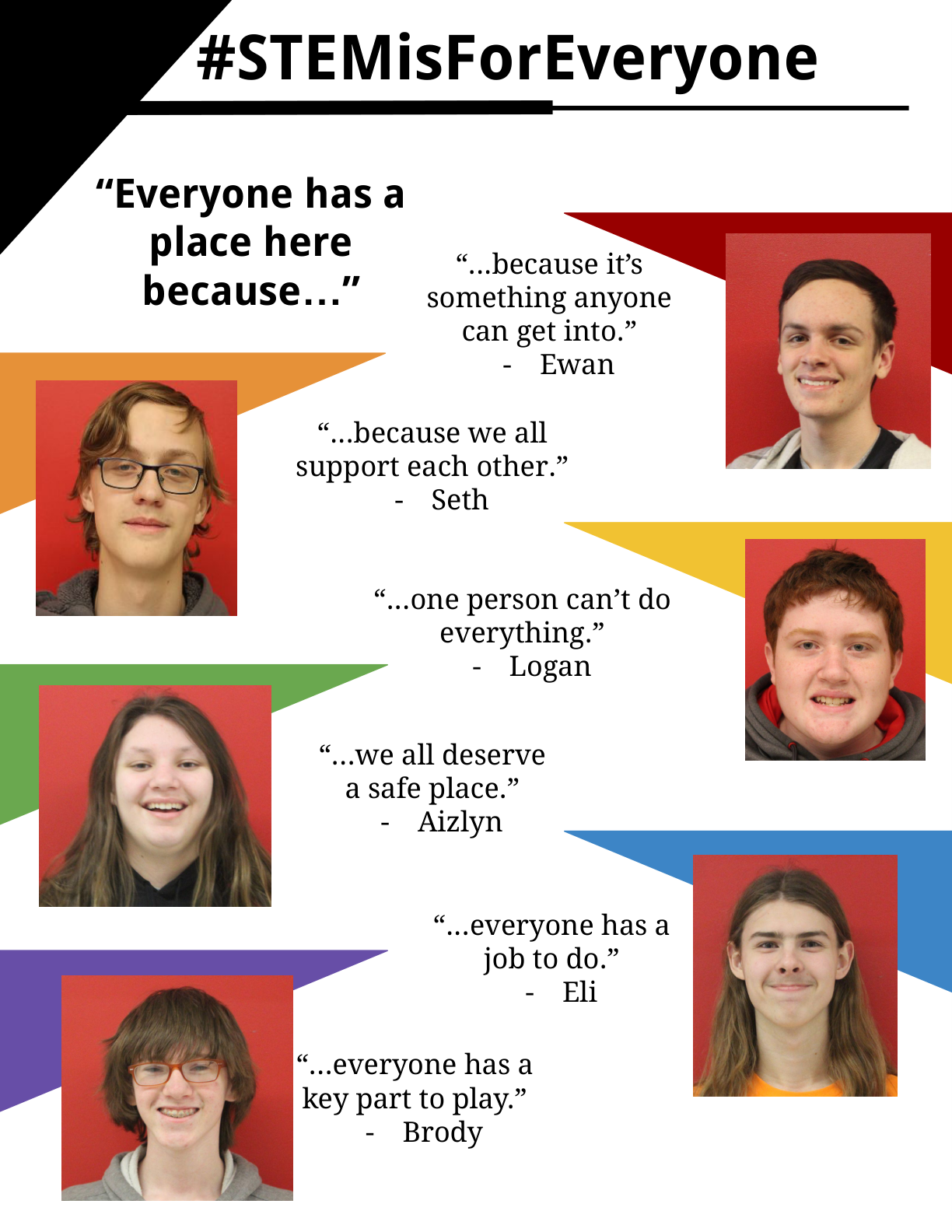
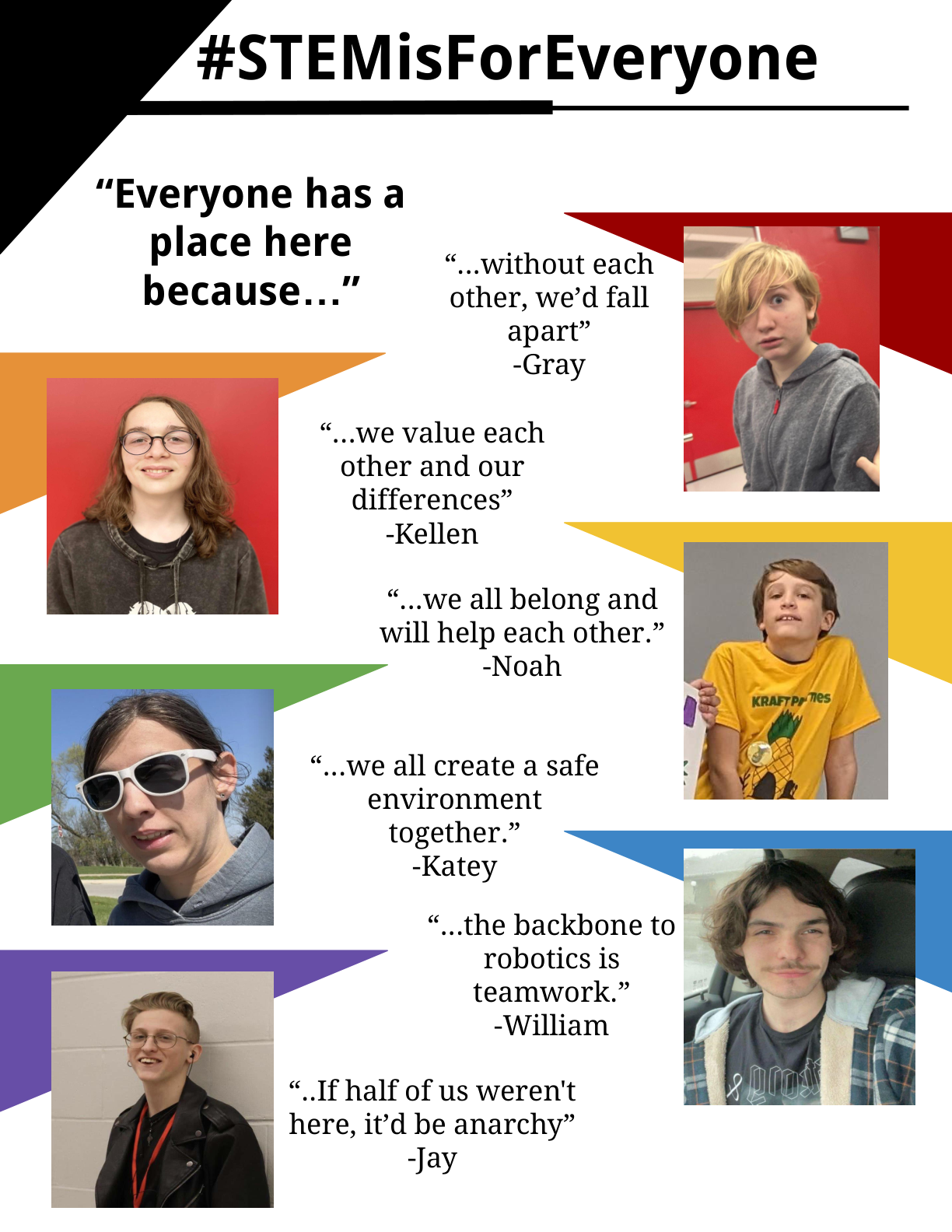
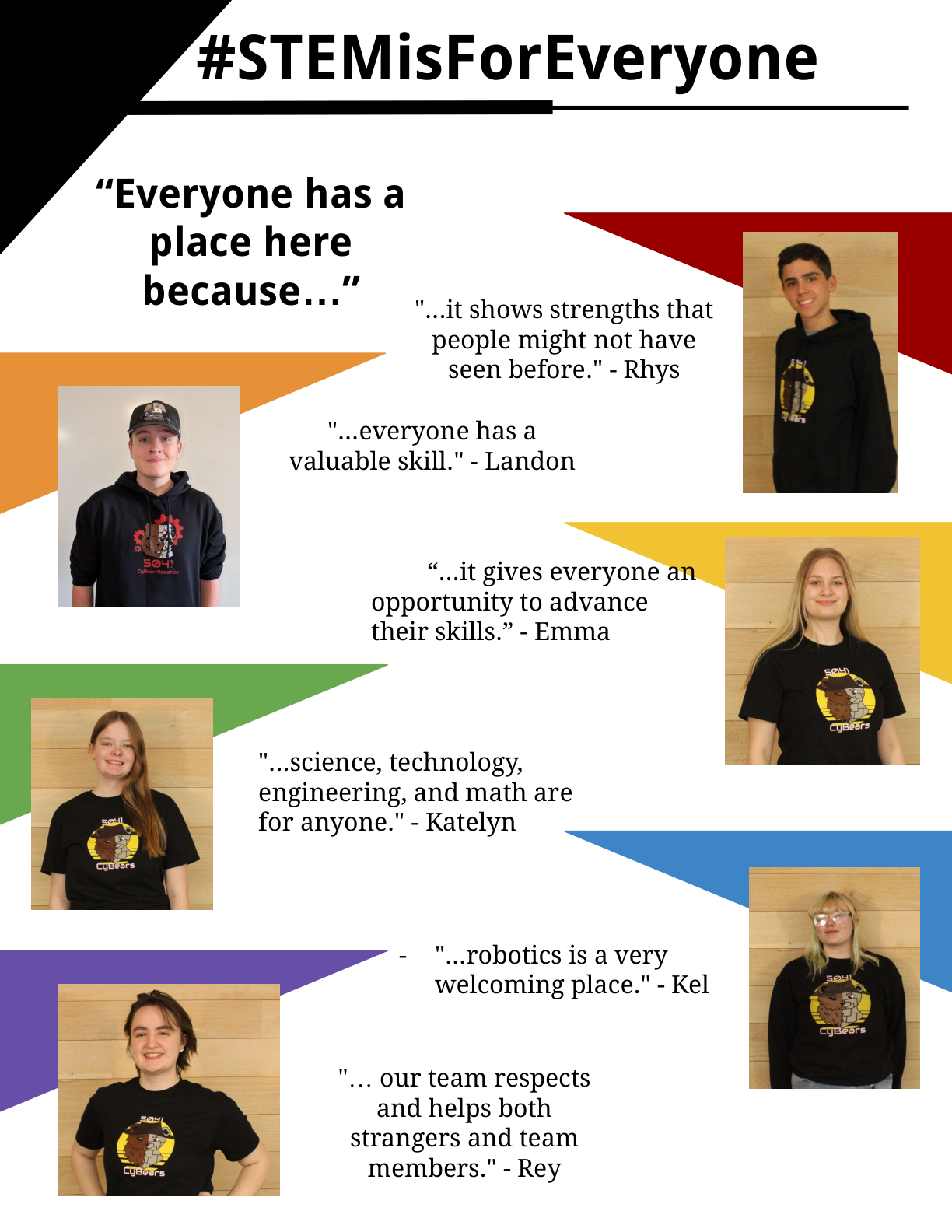
#STEMisForEveryone

Students voices matter

2024-2025 STEM is for everyone quotes
“We all deserve a safe place.”
2023-2024 STEM is for everyone quotes
“We value each other and our differences.”
2025-2026 STEM is for everyone quotes
“Everyone has a valuable skill.”
Student Needs

What students need from the team

Safety

  • Respectful language
  • No bullying or harassment
  • Clear ways to ask for help

Belonging

  • People are invited in
  • Roles are explained
  • Questions are treated as normal

Purpose

  • Everyone has useful work
  • Strengths are noticed
  • Growth matters more than status

When people feel safe, they ask better questions, take useful risks, and stay involved longer.

FIRST Culture

In FIRST Gracious Professionalism is how teams compete and work together

FIRST describes Gracious Professionalism as doing high-quality work while valuing others, respecting individuals, and strengthening the community.

High-quality work

We try to do things well: build carefully, document clearly, test honestly, and improve after mistakes.

Respect for people

We treat teammates, mentors, volunteers, opponents, and visitors as people who matter.

Competitive kindness

We can want to win and still help others, share knowledge, and avoid making anyone feel excluded or unappreciated.

What It Looks Like

Gracious Professionalism in the 5041 shop

During build

  • Explain what you are doing instead of taking over.
  • Let newer students try real tasks with support.
  • Correct unsafe work calmly and clearly.
  • Give credit to the people who helped.

During competition

  • Speak respectfully about other teams and robots.
  • Help teams when you can, even if you may compete against them.
  • Represent 5041 well in the pit, stands, queue, and field.
  • Handle wins and losses with maturity.

Gracious Professionalism is not “being nice instead of being competitive.” It is being competitive in a way that still values people.

Common Team Moments

Choose the response that keeps the space safe

A new student makes a beginner mistake

Risky: “How do you not know that?”

GP: “That part is tricky. Let me show you once, then you try.”

A mechanism breaks before a match

Risky: Blame the last person who touched it.

GP: Focus on the fix first, then review the cause later.

Another team needs a part or advice

Risky: “They should have planned better.”

GP: Help if we can do so safely and responsibly.

Check for Learning

Which response best shows Gracious Professionalism?

A teammate is struggling to understand how to use a tool during build season. You are busy and the robot deadline is close. What is the best response?

Choose one answer.

Daily Actions

How to make space for different team members

New Members

Explain acronyms, tools, roles, and why the team does things a certain way.

Quiet Members

Invite ideas without forcing someone to perform in front of the whole group.

Younger Members

Give real jobs with support instead of only cleanup or watching.

Experienced Members

Ask them to teach, document, and make room instead of taking over.

Communication

Inclusive communication is specific and respectful

Helpful

  • “Want me to show you how this works?”
  • “What part do you want to try?”
  • “Let’s test that idea.”
  • “Can you explain your reasoning?”
  • “I made that mistake too.”

Harmful

  • “Just let me do it.”
  • “Everyone knows that.”
  • “That’s a dumb question.”
  • “You are not a build person.”
  • Jokes that target identity, ability, or background.
Mistakes

Safe teams make failure useful

Normalize

Everyone starts somewhere. Mistakes are expected in design, coding, wiring, awards, and outreach.

Repair

Fix the part, fix the process, and fix the relationship if someone was embarrassed or dismissed.

Document

Turn lessons learned into checklists, CAD notes, code comments, pit notes, and mentor reminders.

Roles and Access

Belonging means access to real work

A team can accidentally exclude people by:

  • Letting the same students use every tool.
  • Assuming quiet students are not interested.
  • Not explaining inside jokes or acronyms.
  • Making business, safety, media, or outreach seem less important than robot work.
  • Only asking friends to help with high-visibility tasks.

A team creates access by:

  • Rotating practice opportunities.
  • Pairing new and experienced members.
  • Explaining the “why” behind decisions.
  • Respecting all team roles as team success.
  • Keeping documentation useful for the next person.
Conflict

Professional conflict keeps people safe

Pause

Stop escalating. Keep your voice controlled and focus on the issue, not the person.

Clarify

Ask what happened, what is needed, and what decision has to be made next.

Escalate

If someone feels unsafe, threatened, excluded, or targeted, bring in a mentor immediately.

5041 expectation: Students should maintain a professional attitude and find diplomatic solutions.

Scenario Practice

A new student is watching instead of participating

Your group is wiring a practice board. A new student has been standing nearby for 20 minutes, but nobody has asked them to help. What is the best response?

Choose the strongest response.

Check for Understanding

Sort each action

Invite a new student to try
Say “everyone knows that”
Explain the reason behind rules
Use jokes that target people
Give real jobs with support
Take over without teaching
Ask what someone wants to learn
Ignore unsafe comments
Respect names and pronouns
Assign only cleanup work
Bring mentors into serious issues
Mock beginner mistakes

Builds Safe Space

Risks Safe Space

Required Quiz

Pass to complete the module

Each question is on its own slide.

Answer all 20 questions, then grade the quiz. Score at least 18 out of 20 to unlock the completion certificate.

Before You Begin

Enter Your Name

Please enter your name before starting the quiz.

This name will appear on your completion certificate.

Quiz Question 1
1 of 20

What is 5041’s team motto?

Quiz Question 2
2 of 20

Which action best shows inclusion?

Quiz Question 3
3 of 20

Why should mistakes be treated carefully?

Quiz Question 4
4 of 20

What should you do when a quiet student has not spoken during a design discussion?

Quiz Question 5
5 of 20

Which statement is most helpful to a beginner?

Quiz Question 6
6 of 20

If someone makes a joke that targets identity, ability, or background, the best response is to:

Quiz Question 7
7 of 20

What does Gracious Professionalism ask teams to blend?

Quiz Question 8
8 of 20

What is the safest first step when a conflict starts getting personal?

Quiz Question 9
9 of 20

Which role deserves respect on the team?

Quiz Question 10
10 of 20

What should experienced members do with their knowledge?

Quiz Question 11
11 of 20

When should serious harassment, bullying, or safety concerns involve a mentor?

Quiz Question 12
12 of 20

What is a good way to include younger members?

Quiz Question 13
13 of 20

Which behavior risks making the team feel unsafe?

Quiz Question 14
14 of 20

What does “access to real work” mean?

Quiz Question 15
15 of 20

If you do not know how to pronounce someone’s name, you should:

Quiz Question 16
16 of 20

What should the team do after a tense disagreement?

Quiz Question 17
17 of 20

Which choice best supports belonging during meetings?

Quiz Question 18
18 of 20

What should you do if someone says they feel unsafe on the team?

Quiz Question 19
19 of 20

Which team habit helps future members?

Quiz Question 20
20 of 20

What is the best summary of this module?

Quiz Results

Grade the quiz

You need at least 18 out of 20 to unlock the completion certificate.

Not submitted.

After passing, advance to the final completion certificate.

5041 CyBear Robotics

Certificate of Completion

Presented to

Student Name

for successfully completing the

Inclusive & Safe Team Culture Training Module

Complete after passing the required quiz.